

The Power of Spessartite, Garnet & Rubellite
The Return of Bold Color in Fine Jewelry
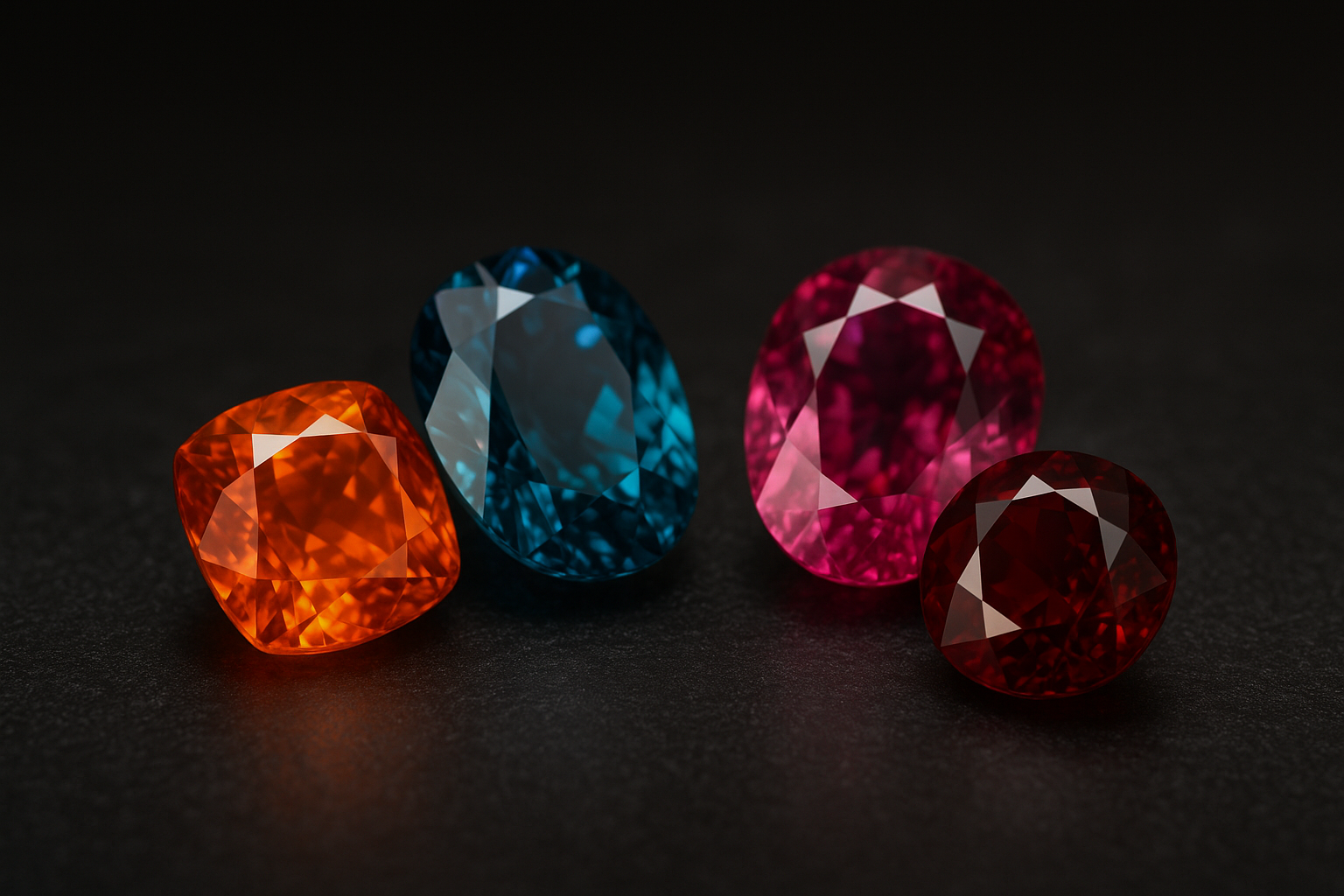
Over the past decade, the high jewelry market has witnessed a steady movement away from traditional white diamonds toward vibrant, colored gemstones. Among these, fiery reds and deep pinks have taken center stage — led by the resurgence of interest in Spessartite Garnet, Almandine & Pyrope Garnets, and the highly coveted Rubellite Tourmaline.
These aren’t just stones. They’re statements — each with a rich origin story, natural rarity, and a unique place in the collector’s world.
Spessartite: The Sunset Caught in a Crystal
With its electric orange hues and high refractive index, Spessartite (a variety of garnet) has become a favorite among avant-garde designers. Originally discovered in Bavaria in the 1800s, its most famous modern sources are Namibia and Nigeria, where top-quality specimens feature exceptional saturation and clarity.
Unlike many colored stones, Spessartite is almost always untreated. Its natural fire and brilliance — sometimes likened to the glow of amber or volcanic lava — make it especially striking in minimalist or geometric settings. Collectors value stones above 5 carats with minimal inclusions as true investment-grade gems.
Garnet: More Than Just Red
Garnet has been used as a talisman of strength and protection since Ancient Rome. But modern gemology has expanded its identity far beyond the familiar deep red.
Today, garnet is a family of minerals — with varieties like Almandine, Pyrope, Spessartite, Grossular, and Tsavorite — each bringing its own color spectrum and character.
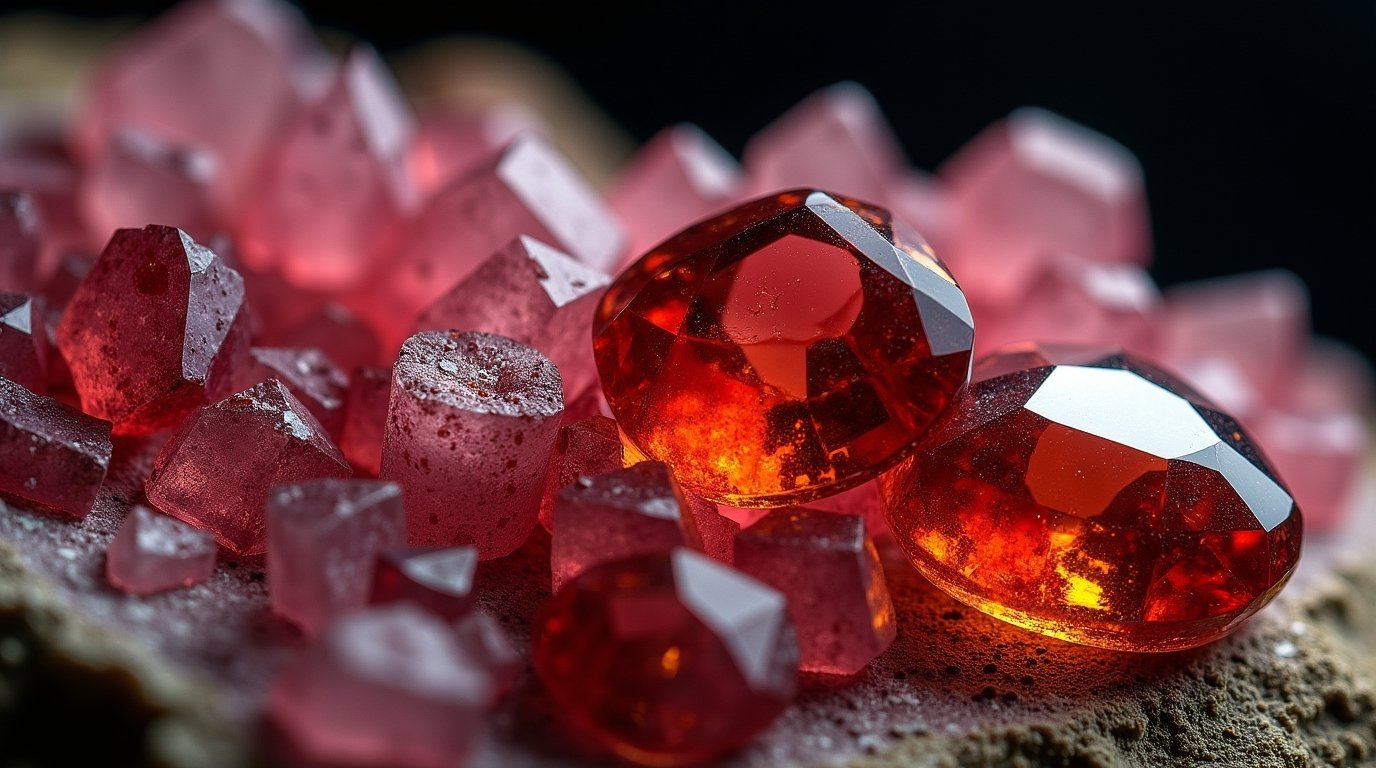
When it comes to red garnets, Almandine and Pyrope dominate the market. They are accessible yet deeply luxurious, especially when cut with precision and mounted in vintage-inspired settings. While not as rare as Spessartite, high-quality red garnets remain a favorite among connoisseurs for their affordability and depth of symbolism.
Rubellite: The Untamed Beauty of the Tourmaline Family
Rubellite stands apart from other pink or red gemstones due to one major factor: it maintains its color under all lighting conditions. Many stones shift in hue under different light, but a true Rubellite glows with an inner fire — from sunlight to candlelight.
Found in Brazil, Mozambique, and Afghanistan, Rubellite is technically a red-to-pink variety of tourmaline. It’s often included (like emerald), which only adds to its character. In fact, clarity-enhanced Rubellites are common, but untreated specimens with rich tone and good transparency command premium prices.
What’s interesting is how Rubellite bridges modern and ancient appeal. It’s prized equally by fashion-forward designers and by collectors who value emotional resonance — pink representing the heart, red representing life.
Why Collectors Love These Three Stones
Final Word: Red Is Back — But Refined
If you’re building a gemstone collection in 2025, it’s not just about value — it’s about meaning, individuality, and presence. Whether you’re drawn to the burnt orange of Spessartite, the velvet red of Garnet, or the blushing glow of Rubellite, these stones offer not just beauty — but emotion in color.