
Turquoise
Turquoise is one of the oldest and most highly regarded gemstones in the world, valued for its beautiful, distinct color that ranges from robin’s egg blue to greenish-blue. It has been used in jewelry and adornment for thousands of years, dating back to ancient Egypt, and is known for its calming and protective properties. The gemstone is composed of hydrous phosphate of copper and aluminum, which gives it its characteristic color. Turquoise is often opaque, though some varieties can exhibit a slightly translucent quality.
Turquoise: The Gem of Tranquility and Protection
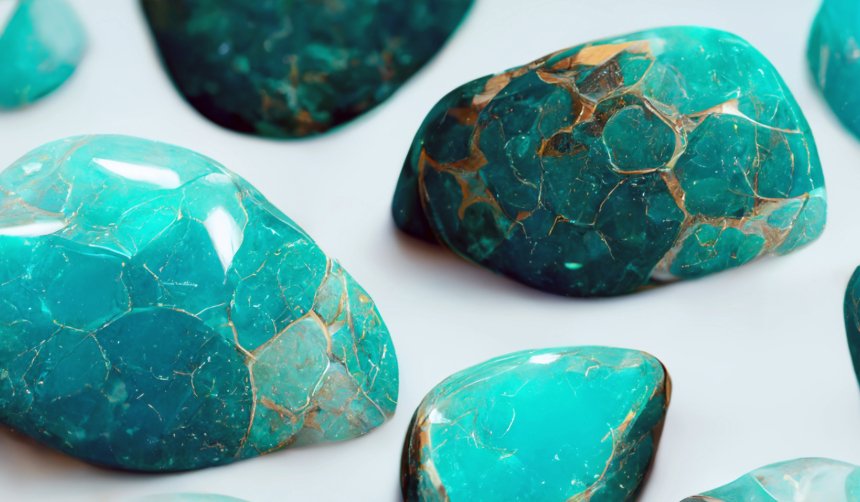
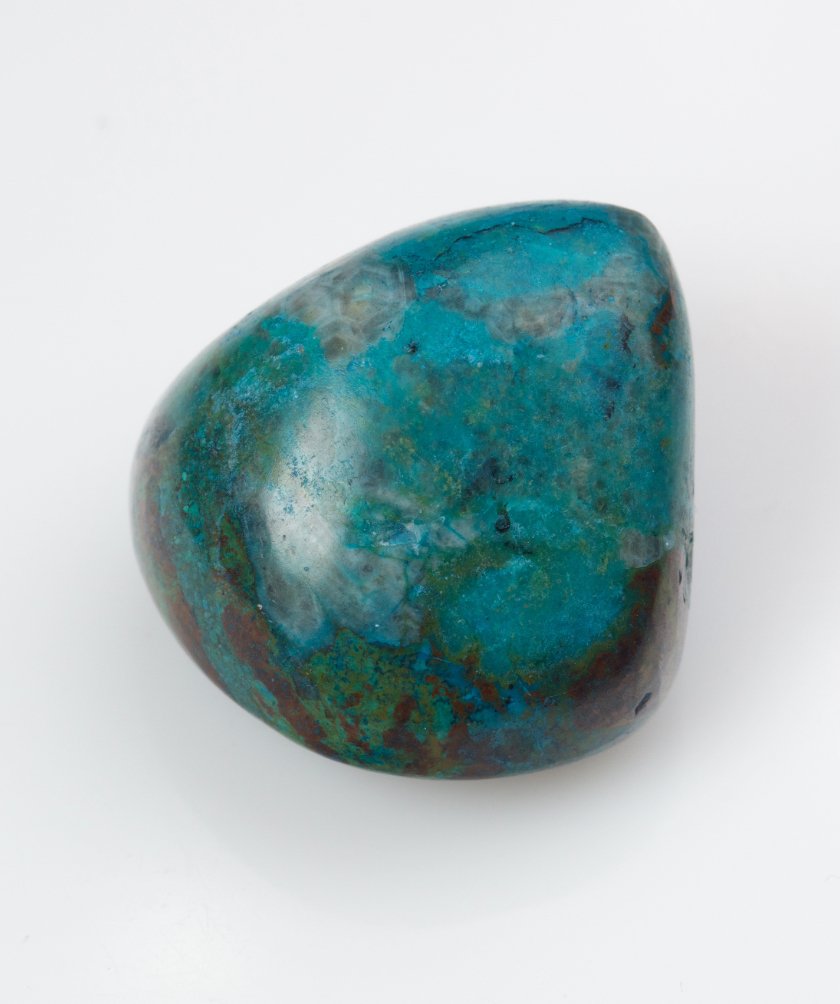
Turquoise is one of the oldest and most highly regarded gemstones in the world, valued for its beautiful, distinct color that ranges from robin’s egg blue to greenish-blue. It has been used in jewelry and adornment for thousands of years, dating back to ancient Egypt, and is known for its calming and protective properties. The gemstone is composed of hydrous phosphate of copper and aluminum, which gives it its characteristic color. Turquoise is often opaque, though some varieties can exhibit a slightly translucent quality.
Turquoise is relatively soft compared to other gemstones, with a hardness of 5 to 6 on the Mohs scale, which means it requires careful handling to avoid scratching. Despite its softness, turquoise is highly prized for its unique color and is often used in rings, necklaces, bracelets, and earrings. The best quality turquoise stones have a vivid, even blue color, while stones with a greenish hue, which is often due to the presence of iron, are still valued but generally considered less valuable.
Stone Name & Alternate Names
-
Stone Name: Turquoise
-
Alternate Name: Often called the “Sky Stone” or “Stone of Heaven” for its serene blue-green hue and ancient cultural significance.
Key Properties
-
Color: Turquoise comes in various shades, ranging from sky-blue to greenish-blue, with the purest, most prized color being a bright, even blue.
-
Hardness: 5 to 6 on the Mohs scale, which makes it relatively soft and requires careful handling to avoid scratches.
-
Clarity: Turquoise is typically opaque, though some stones may have a slightly translucent appearance.
-
Refractive Index: 1.62-1.65, contributing to its smooth, matte luster.
Where It’s Found
-
Original Discovery: Turquoise has been used by ancient civilizations for thousands of years, with some of the earliest known uses dating back to Egypt around 3000 BC.
-
Major Deposits: The main sources of turquoise are found in Iran, the southwestern United States (particularly Arizona and Nevada), Mexico, and parts of China.
-
Modern Production: While Iran remains a historically significant source of high-quality turquoise, the United States and Mexico also produce significant quantities of turquoise, often with unique color variations.
Available Versions
-
Natural Turquoise: Most turquoise stones are natural, and the most valuable stones exhibit a vivid blue color with minimal matrix (veining).
-
Treated Stones: Some turquoise stones are treated to enhance their color and durability, often by stabilizing the stone with resin or epoxy. These treated stones are commonly used in mass-produced jewelry.
-
Synthetic Turquoise: Lab-created turquoise stones are available, providing an affordable alternative to natural turquoise, but they typically lack the character and vibrancy of natural stones.
Cultural and Metaphysical Beliefs
-
Turquoise has long been considered a stone of protection, especially for travelers. It is believed to bring peace, emotional healing, and balance to its wearer.
-
In various cultures, turquoise is thought to protect against negative energy and promote communication, wisdom, and friendship.
-
The gemstone is also associated with the throat chakra and is believed to encourage honest communication and self-expression.
Care & Maintenanc
-
Cleaning: Clean turquoise with warm soapy water and a soft cloth. Avoid harsh chemicals, ultrasonic cleaners, or steam cleaning, as turquoise is sensitive to these treatments.
-
Storage: Due to its relative softness, turquoise should be stored separately from harder gemstones, such as diamonds, to avoid scratches. A soft pouch or jewelry box is ideal for storage.